Sea Venom FAW.21/22 'In Combat Operations' (2in1)

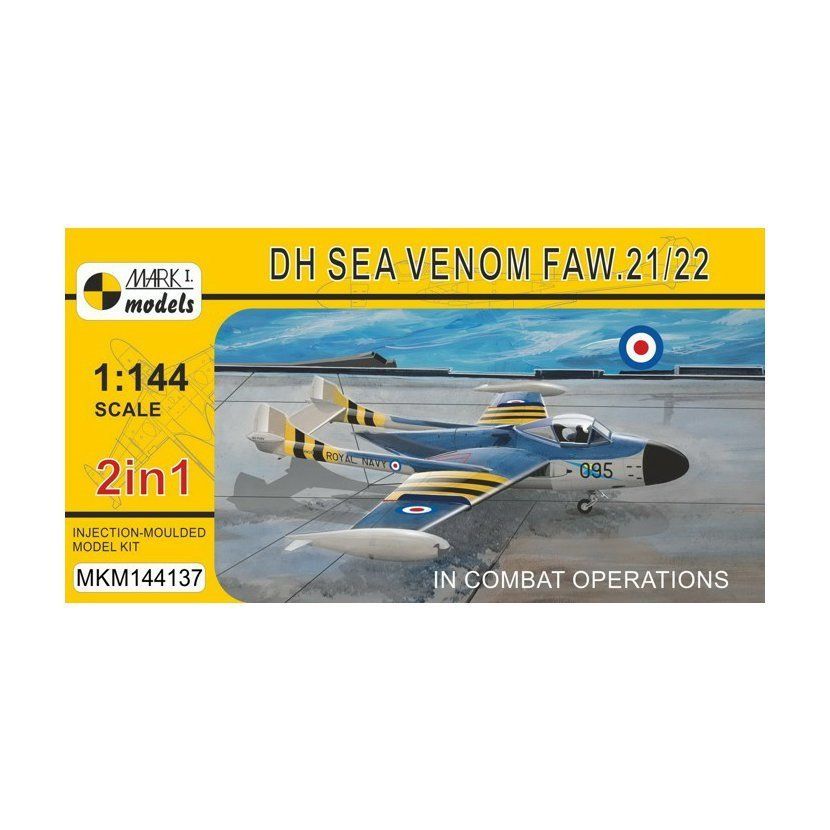

Sea Venom FAW.21/22 'In Combat Operations' (2in1)
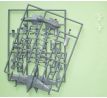
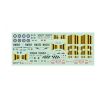
Description: Two injection-moulded kits are supplied in this box and each kit contains 34 parts and a clear part (the cockpit canopy). A comprehensive decal sheet is included.
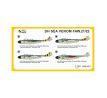
Colour schemes included in the kit:
1) de Havilland DH.112 Sea Venom FAW Mk.21, XG677/221-Z, No.809 NAS, HMS Albion, 'Operation Musketeer', November 1956
2) de Havilland DH.112 Sea Venom FAW Mk.21, WW189/451-J, No.892 NAS, HMS Eagle, 'Operation Musketeer', November 1956
3) de Havilland DH.112 Sea Venom FAW Mk.21, WW281/095, No.893 NAS, HMS Eagle, 'Operation Musketeer', November 1956
4) de Havilland DH.112 Sea Venom FAW Mk.22, XG684/488-E, No.894 NAS, HMS Eagle/Akrotiri AB, Cyprus, anti-EOKA sorties, autumn 1958
| Ref. No.: | MKM144137 |
| Availability: | IN STOCK |
Sea Venom FAW.21/22 'In Combat Operations' (2in1)
de Havilland Sea Venom FAW.21/22 'In Combat Operations' (2in1)
The de Havilland Sea Venom was a British jet all-weather fighter developed for the Royal Navy from the RAF's Venom NF.2 night fighter. First flown in April 1951, the Sea Venoms were produced as the FAW.20 (50 a/c), improved FAW.21 (167 a/c) and uprated FAW.22 (39 new built and other Mk.21s converted). In total, 256 aircraft were taken on FAA's charge, while 39 Sea Venoms, designated FAW.53, were delivered to the Royal Australian Navy in 1956.
It was a two-seat monoplane aircraft, of all-metal construction, powered by a DH Ghost turbojet. It featured twin-boom tail configuration, with two wing-root intakes and folding wings with wing tip fuel tanks, clear-view canopy and was fitted with ejection seats (Mk.21/22s). Its armament consisted of four fixed Hispano cannons, while a provision was made for two 500lb or 1,000lb bombs, or drop tanks, or eight 3" RPs below the wings. The FAW.22s could also carry the Firestreak guided missiles. A handful of Mk.21 and Mk.22 aircraft were modified for ECM purposes as ECM.21 and 22s, lacking the on-board armament, while three RAN Sea Venoms were later converted to TT.53s mounting the Del Mar target tug system.
The Sea Venoms replaced the Sea Hornets piston-engine fighters and were in the FAA front-line service with seven squadrons from March 1954 until the end of 1960. The Sea Venoms also took part in Suez campaign in the autumn of 1956, performing well during army support operations. The last Sea Venom aircraft were withdrawn from the FAA and RAN service in 1970 and 1973, respectively.
Products purchased together with this product
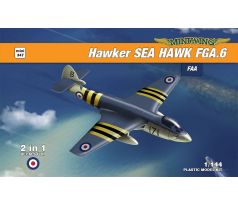
Hawker SEA HAWK FGA.6 FAA
British Carrier Based Fighter / Attacker
Description:
30 plastic parts
2 kits in the box
decals for 3 versions of FAA
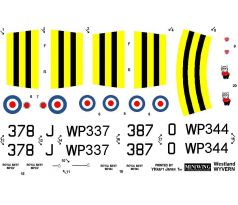
Decal set for Westland WYVERN S.4
Decal set printed on fully painted surface (ALPS printed) for Westland WYVERN S.4 in 1/144 scale. These are leftover decal sets from the MINIWING resin kit, which are no longer available. Suitable for use on other kits as well.
Variants:
- Westland WYVERN S.4, Royal Navy, 830 Squadron, HMS Eagle, 1956
- Westland WYVERN S.4, Royal Navy, 831 Squadron, HMS Ark Royal, 1957
IMPORTANT NOTICE: This item is offered with free shipping, but will be SHIPPED WITH A STANDARD ORDER ONLY.
This means, please do not add this item to your cart separately.
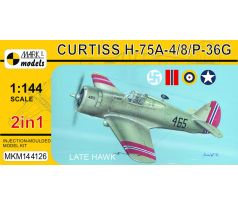
Curtiss H-75A-4/8/P-36G 'Late Hawks'
Two injection-moulded kits are supplied in this box and each kit contains 23 parts and four clear parts (the cockpit canopy, rear windows and a landing light). A comprehensive decal sheet is included.
Colour schemes included in the kit:
1) Curtiss H-75A-4, CUc-504, (ex-French H-751 No.24/ex-Luftwaffe DS+NQ), 1/LeLv 12 (Fighter Sq.), Finnish Air Force (Ilmavoimat), Joroinen airfield, Finland, summer 1941
2) Curtiss H-75A-8, No. 465, ‘Little Norway’ Air Force Training Camp, Norwegian Army Air Service (Hærens flyvåpen), Toronto Island Airport, Ontario, Canada, 1942-43
3) Curtiss Mohawk Mk.IV, BS734, White 14, Air Transport Auxiliary Flight, Royal Air Force, Wroughton airfield, Wiltshire, U.K., 1941
4) Curtiss P-36G (ex-Norwegian H-75A-8), s/n 42-108995, Yellow 2108995, USAAF, Patterson Field, Ohio, U.S.A., early 1943
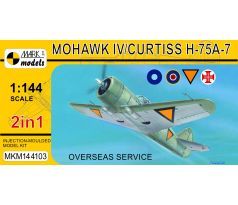
Mohawk IV/Curtiss H-75A-7 'Overseas Service'
Two injection-moulded kits are supplied in this box and each kit contains 21 parts and four clear parts (the cockpit canopy, rear windows and a landing light). A comprehensive decal sheet is included.
1) Curtiss Mohawk Mk.IV, BS734, Grey A, ‘Joe Soap II’, No.155 Sq., Royal Air Force, Imphal airfield, Northeast India, late 1943
2) Curtiss Mohawk Mk.IV, BB977, Black D, No.5 Sq., Royal Air Force, Agartala airfield, Northeast India, January 1943
3) Curtiss H-75A-7, s/n C-332, Black C332, 1-VLG-IV (1st Sq., 4th Aircraft Group), Royal Netherlands East Indies Army Air Force (Militaire Luchtvaart – Koninklijk Nederlandsch-Indisch Leger, ML-KNIL), Madiun airfield, Java, Netherlands East Indies, early 1941
4) Curtiss Mohawk Mk.IV, 485 (ex-RAF Mohawk Mk.IV, s/n unknown), White XY-F/485, ‘XY’ Flt., E.E.C. 3 (Esquadrilha Expedicionária n° 3), Portuguese Air Force (Aeronáutica Militar), Ota airfield (BA 2), Portugal, summer 1943

